Featured · The interview
Getting into the kitchen
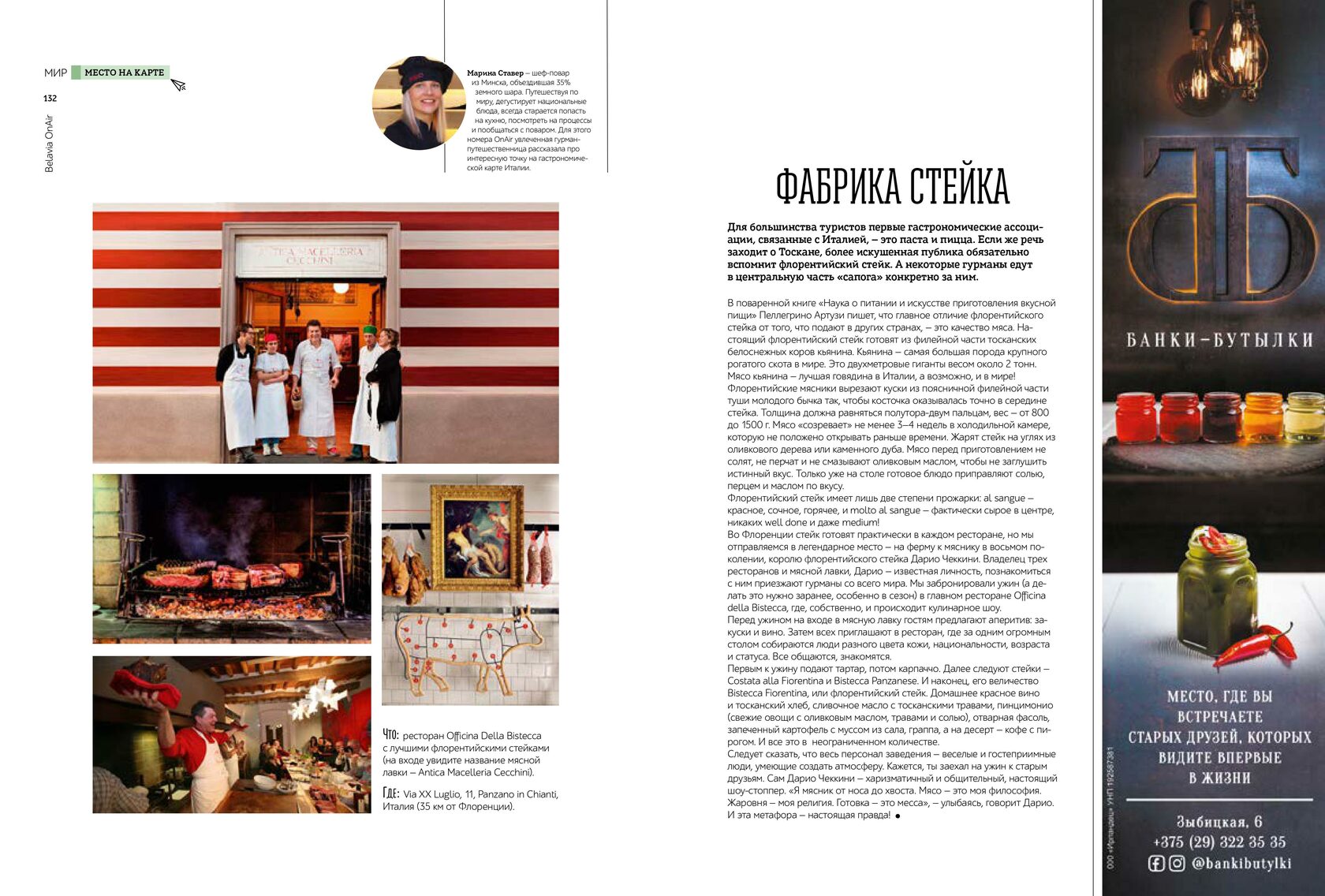
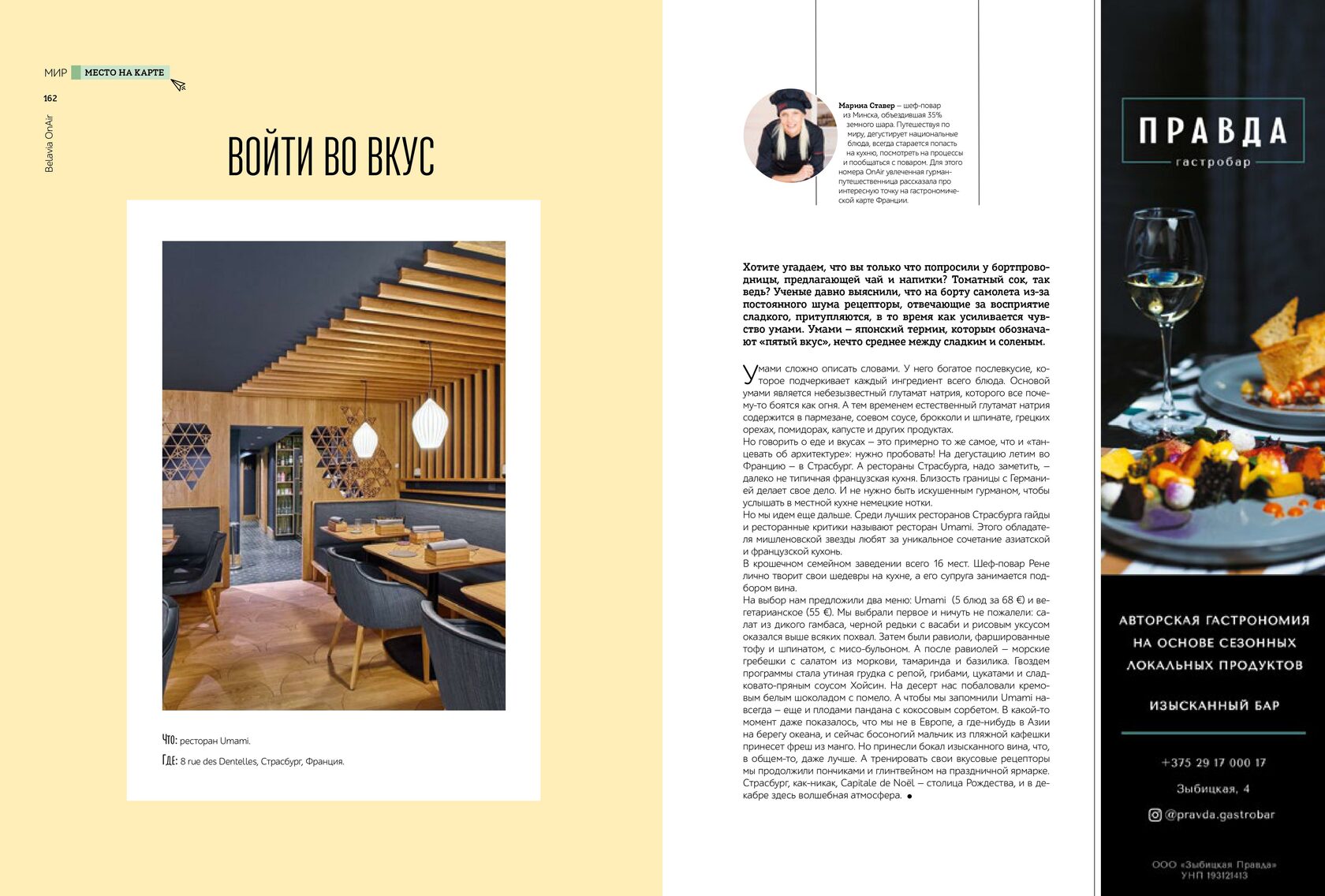
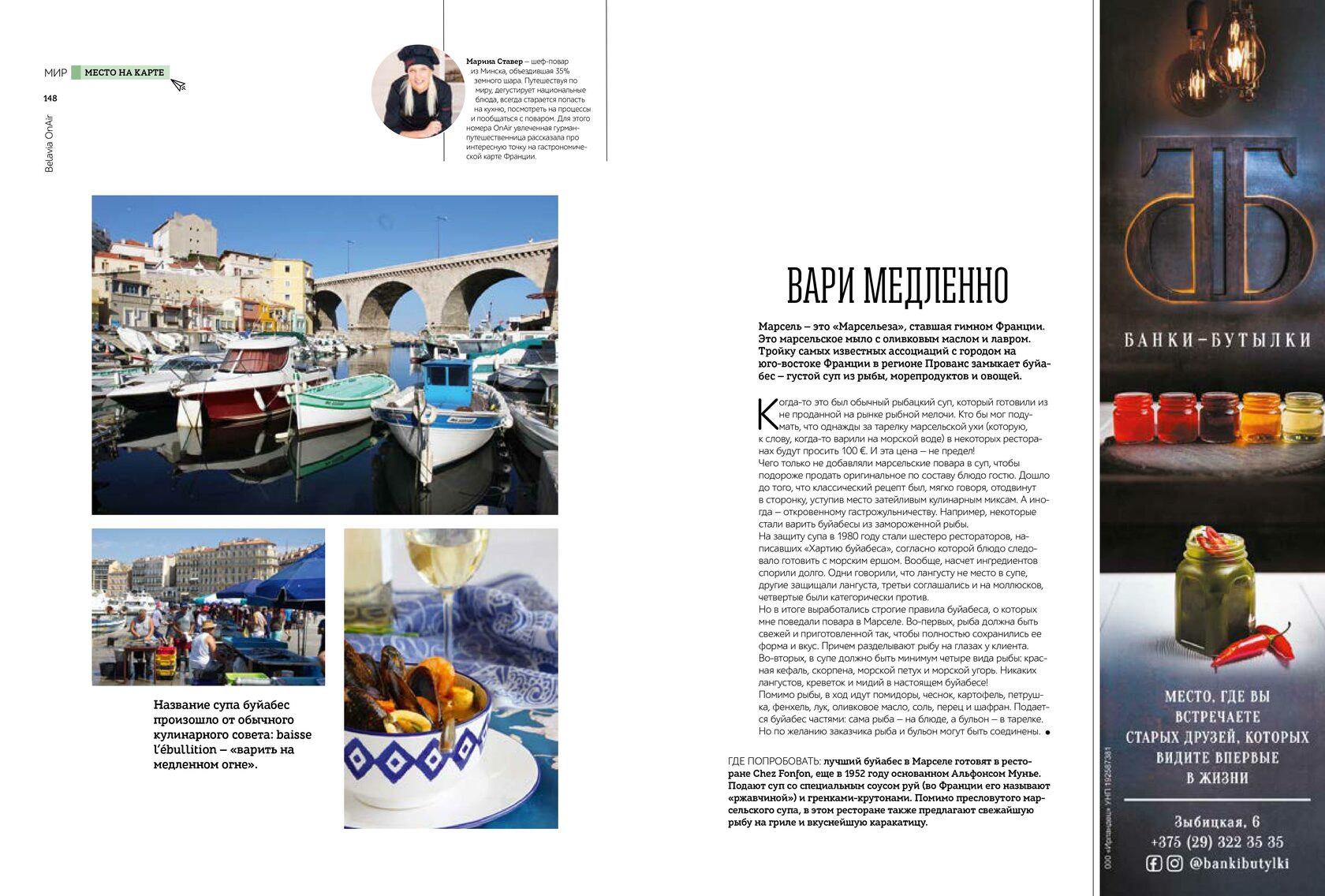
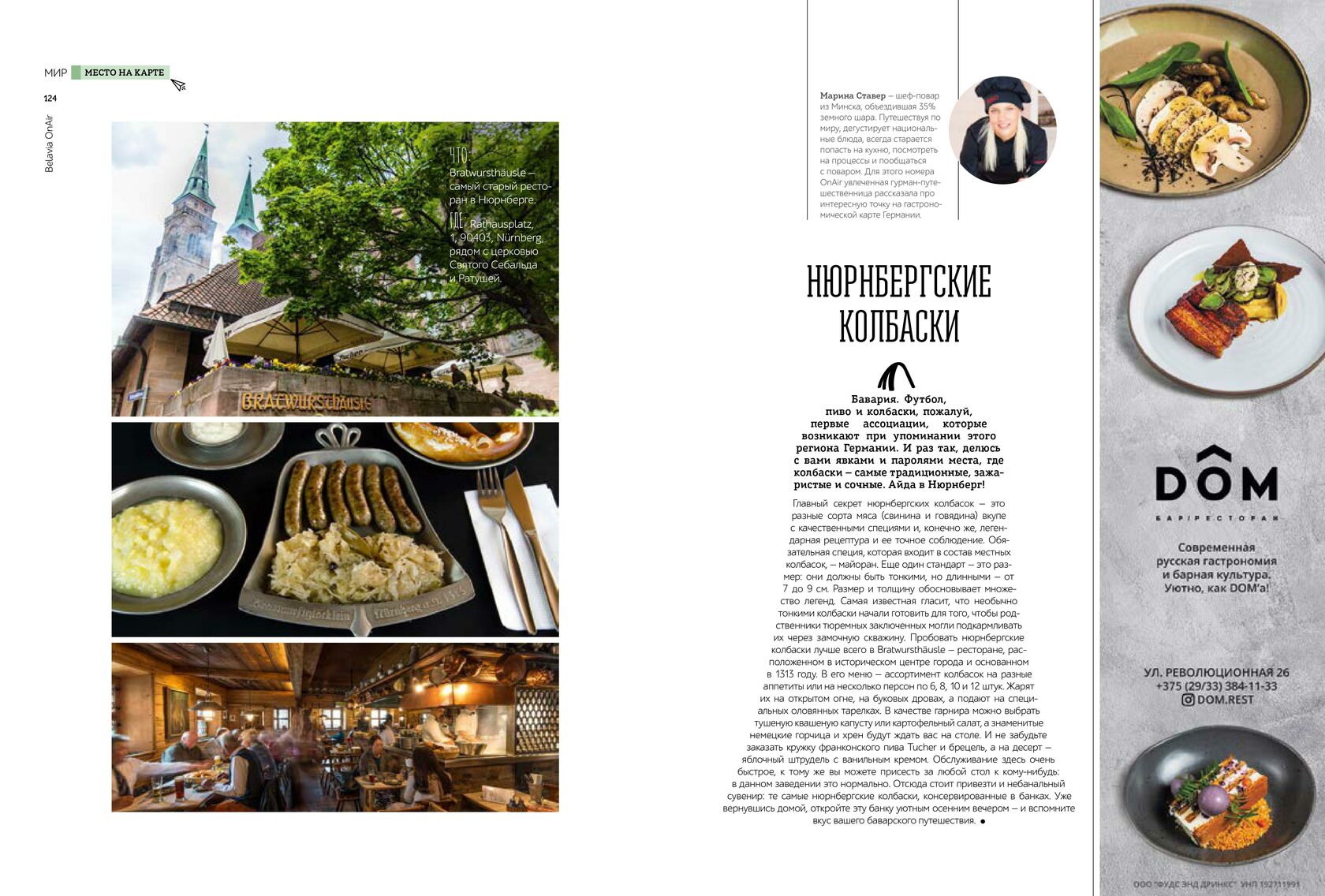
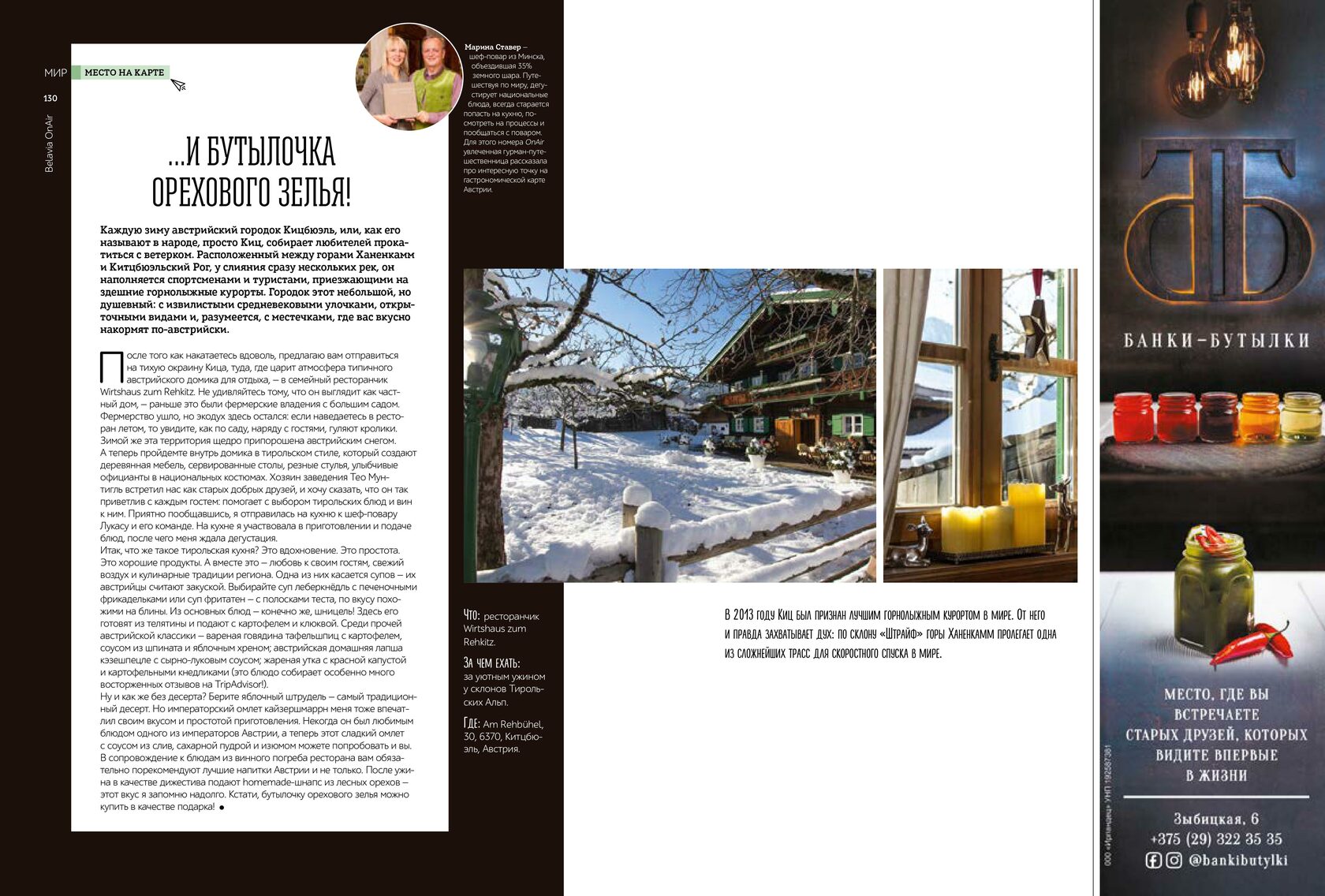
This is the interview where I explain why I always end up in the sizzling, fragrant kitchen, whether in Amsterdam, Tenerife, or Tallinn. It is the story of how those travels became the menus I cook in Miami today.
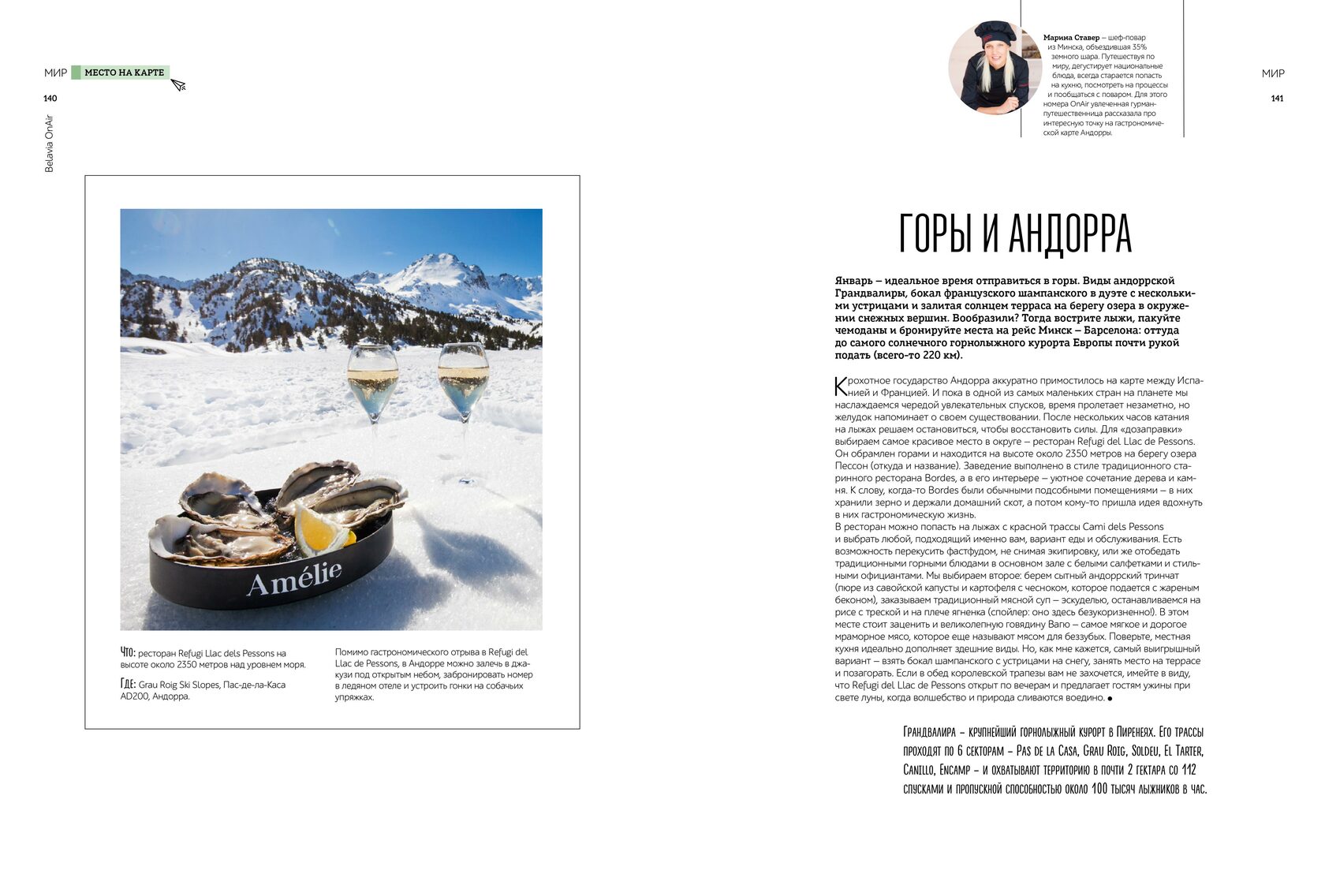
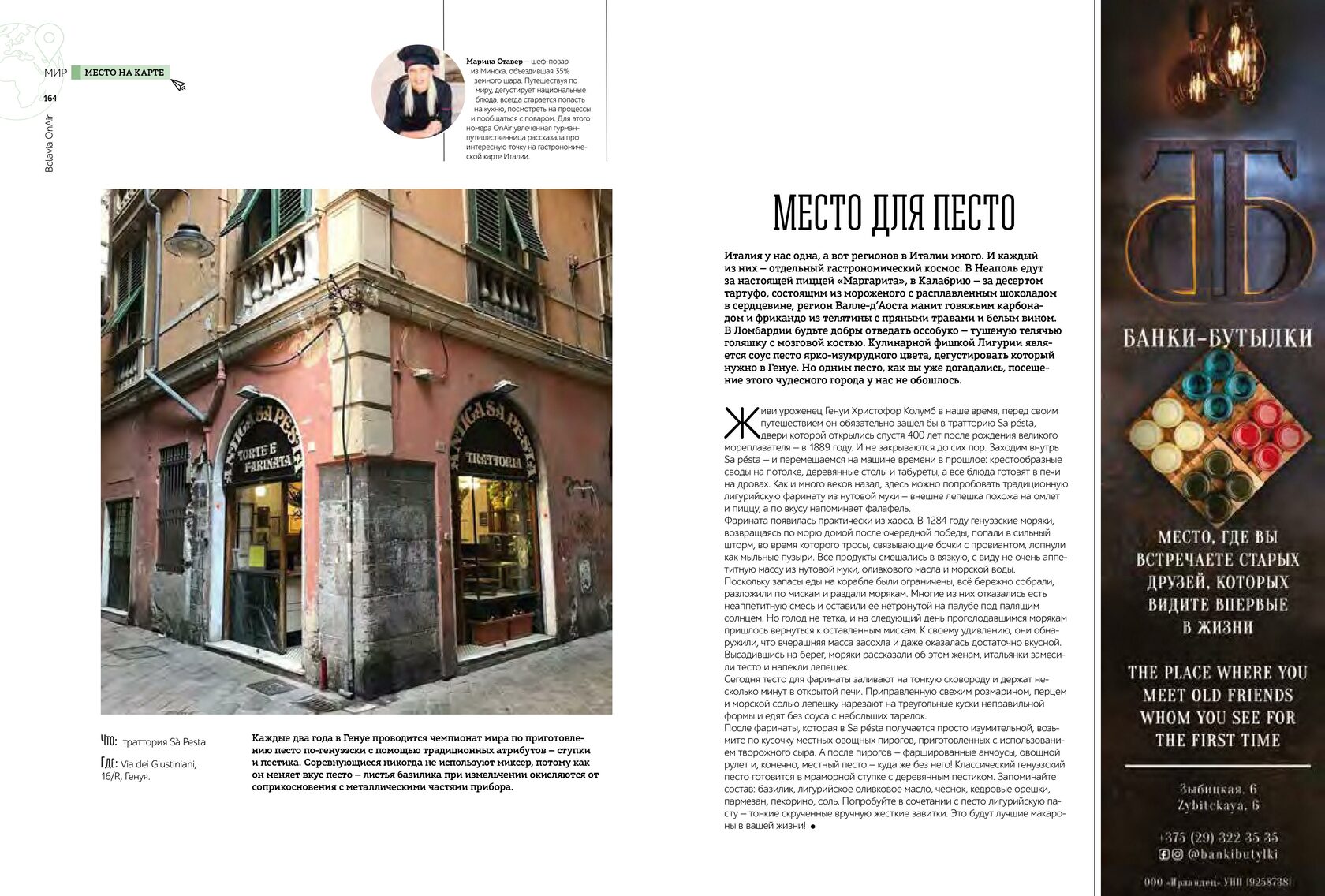
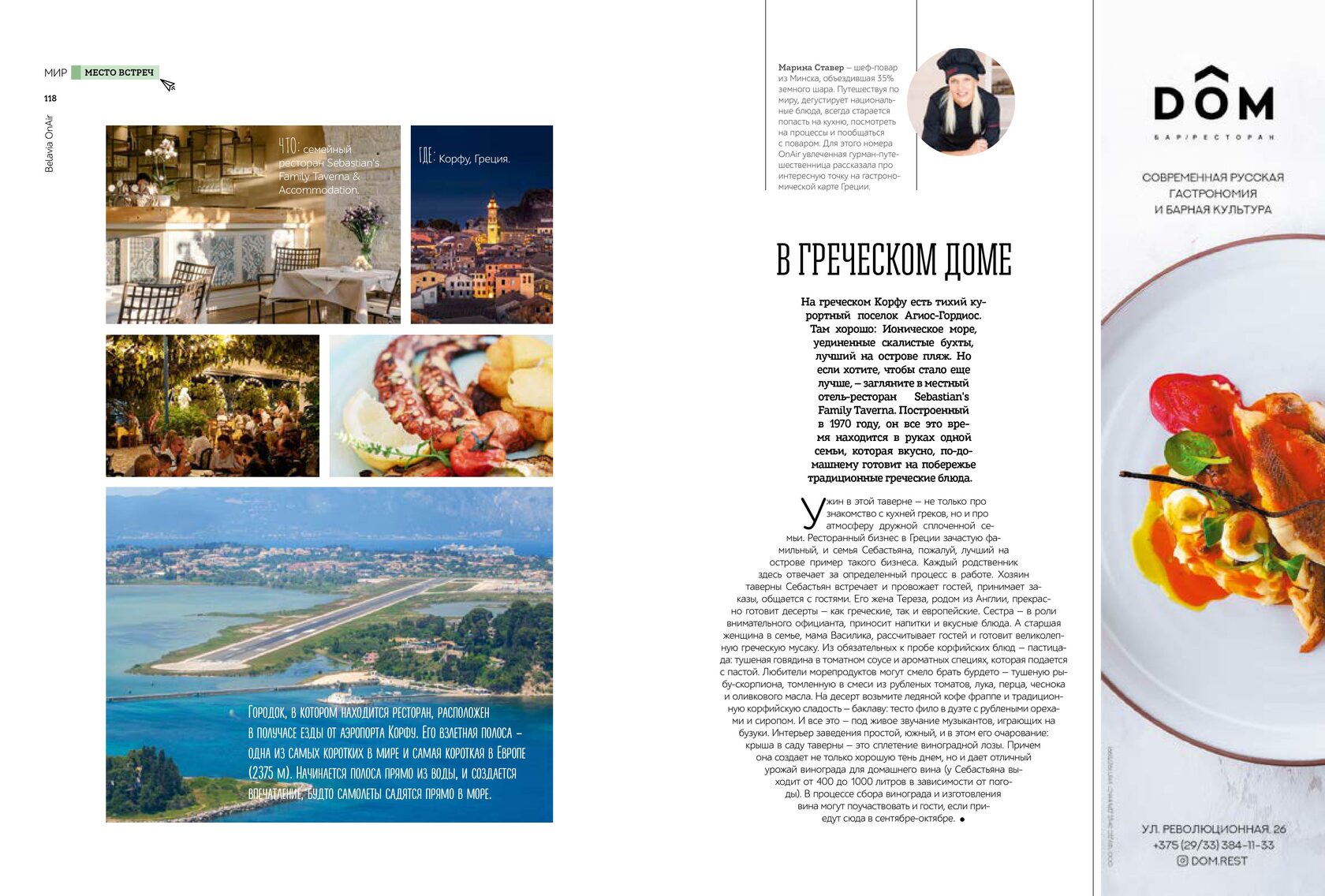
Minsk chef Marina Staver builds her author's menu from recipes collected on the road — so far 35% of the world. In this Belavia OnAir interview she sends readers to Lviv for blowtorch-melted coffee and marrow bones, to Amsterdam for maatjes haring, to Andorra for trinchat and tupi cheese, to Tenerife for moray eel, and to Tallinn for sprats.
«Getting into the kitchen» — page 1 ↗«Getting into the kitchen» — page 2 ↗
Read the full translation
KITCHEN
A Minsk chef, Marina Staver, finds the recipes for her dishes not only in the culinary books she brings back from trips all over the world, but also in the trips themselves. She has marinated and fried moray eel on the Canary Islands, has tasted snails cooked to an old recipe in Andorra, and knows exactly where you have to fly for something delicious.
By Nastasya Kostyukovich
"For me travel is life; without it I go into 'withdrawal'. My main 'souvenirs', along with the impressions, are new tastes and techniques, cookbooks and recipes."
Lviv: where the simplest meal is staged as an unforgettable show
When you choose the destination of your next trip, does the country's cuisine play a role?
Of course! Culinary traditions are the main thing that interests me. I position myself precisely as a chef with an author's menu built from the recipes of the countries I have been to. So far that is only 35% of the world, but there is something to aim for. When travelling I learn recipes from local residents, I taste national dishes, I always try to get to the kitchen. People often ask me: "Where did you like it most?" — and I find it hard to answer, because in every country and every city you can find a gastronomic gem, something striking and unique.
I advise everyone to visit Lviv without fail. First, it is close and no visa is needed; second, in Lviv they know how not merely to serve food, but to give you emotions and a show. There they can stage the simplest meal as an unforgettable show. I definitely recommend dropping into "Kopalnya Kavy" (the "Coffee Mine") for the impressions and trying the sealed coffee. It would seem that everything is simple: you are served coffee with milk in a metal mug, thickly sprinkled with brown sugar on top. But they melt it with a blowtorch in the dark room of a café located in a former mine!
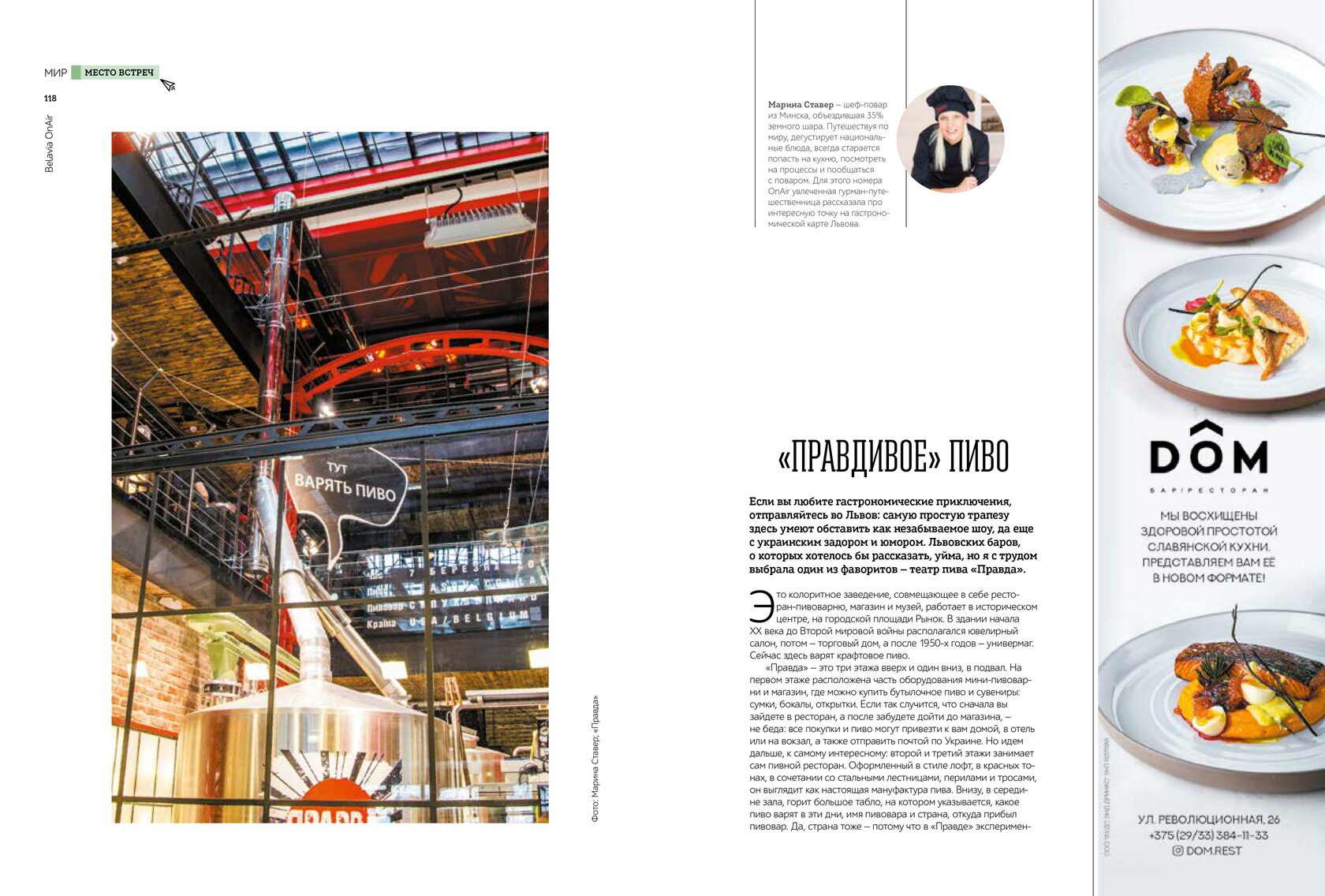
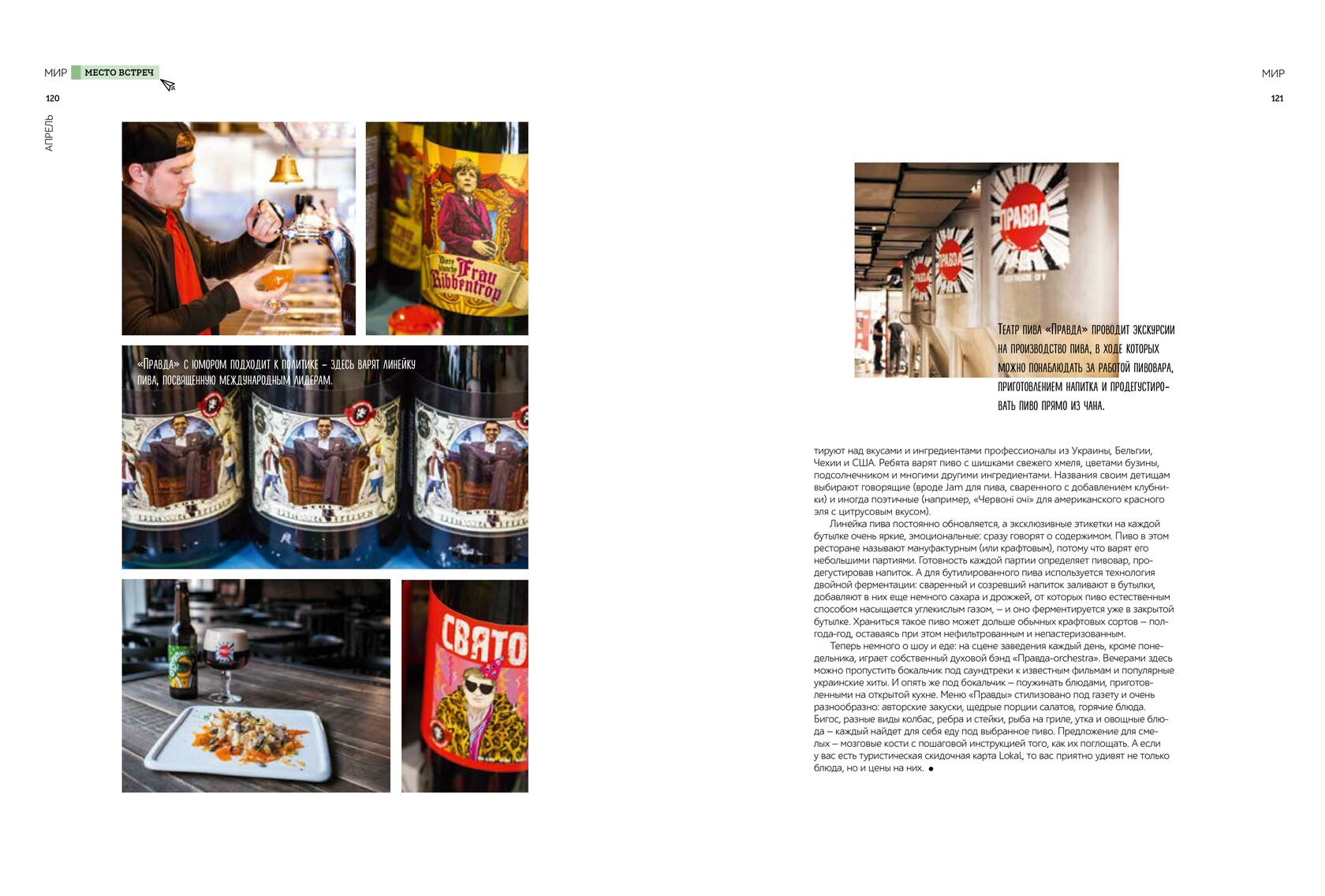
In Lviv's "Pravda Beer Theatre" on Rynok Square they serve huge marrow bones as a snack with beer: you have to get the filling out of them, dip it into two kinds of sauce, and only then eat it. Interestingly, a detailed instruction for eating it is brought together with the dish. I very much miss that kind of emotional approach to the customer in the restaurants and cafés of Minsk.
Potatoes as Minsk's speciality — and De Kas, the greenhouse restaurant in Amsterdam
Lviv has its own "specialities": coffee, chocolate, beer. What could be associated with Minsk in the same way, in culinary terms?
Potatoes, of course! It is our brand, the product Belarusians are immediately and almost always associated with. We could definitely make a hundred potato dishes our gastronomic speciality. Serve them with an instruction or with historical information about how the potato ended up in Belarus and how it grows; offer the visitors some way of taking part in the process — for example, digging up a couple of tubers themselves out of an improvised vegetable bed. The tourists, of whom there are more every day, would be delighted!
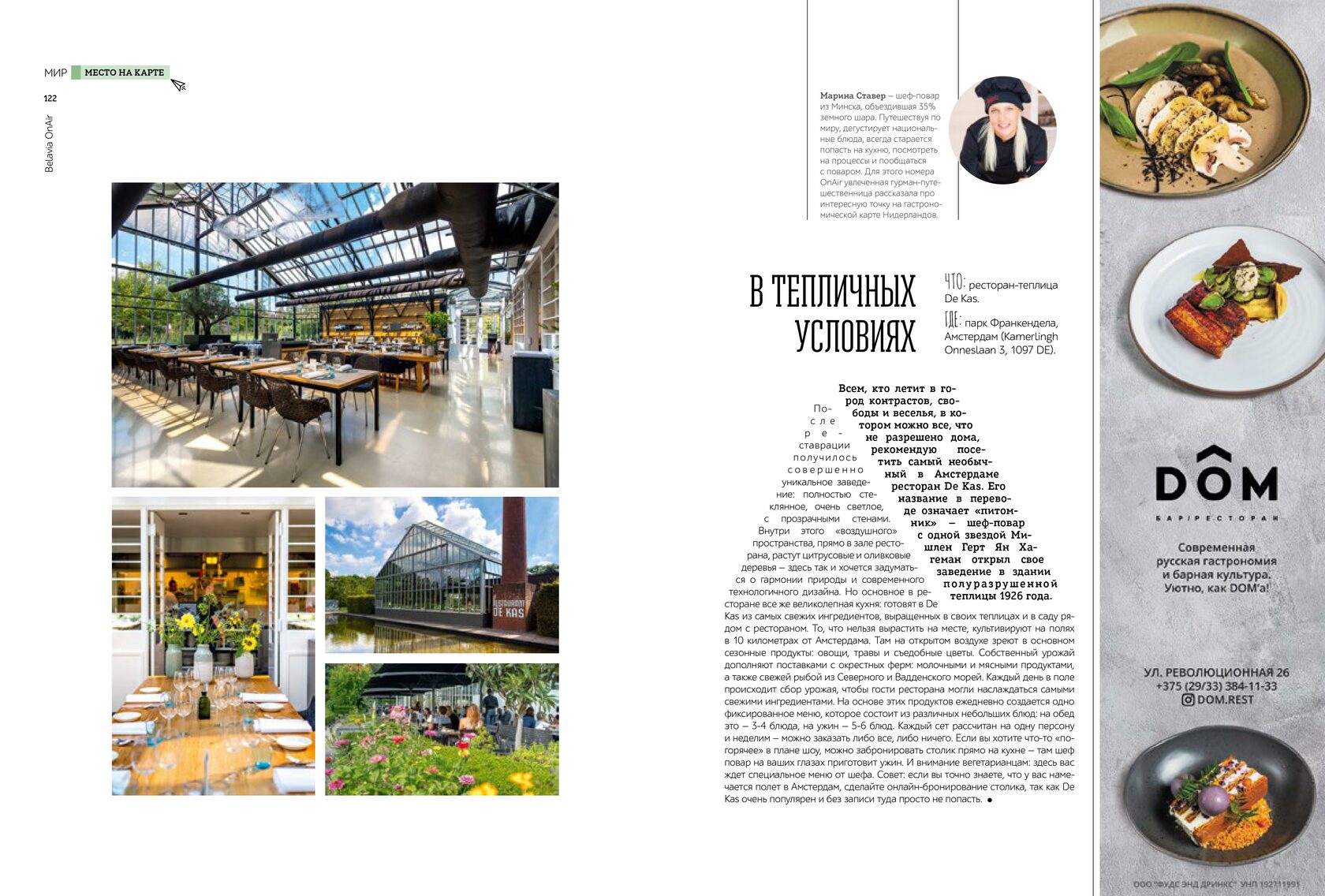
We need more unconventional approaches. A good example is the farm restaurant De Kas in Amsterdam, housed in the building of a genuine glass greenhouse in Frankendael Park. Everything that lands on the plates of its guests is grown right there, or on plantations outside the city that belong to the restaurant's owners.
Amsterdam: cheeses, maatjes haring, and the tulip glass at Wynand Fockink
What else would you advise trying in Amsterdam?
Cheeses! This is one of the cheese capitals of the world. The most popular Dutch cheese in Holland itself is "Gouda" — it is the king of Dutch cheeses. The Old Amsterdam brand of cheese is called the country's calling card. People here love "Maasdam", the cheese with the biggest "eyes", and the ball-shaped "Edam".
The real local delicacy is lightly salted Dutch herring, sold all over Amsterdam from stalls in the colours of the national flag. The June festival of the young herring, Hollandse Nieuwe, is devoted to it. The best Dutch herring is maatjes haring — the "girl-herring", or "herring virgin", that is, a fish that had not spawned before it was caught. It literally melts in the mouth. The Dutch have invented their own special way of eating herring: they take the little fish by the tail, raise it high above their heads, open their mouths and bite it off piece by piece. A typical Amsterdam scene is people riding a bicycle and, right on the move, snacking on herring in a white bun with onion and cucumber. I also advise visiting the old city liqueur shop Wynand Fockink in the narrow Pijlsteeg alley, not far from the famous "Red-light district". In the tiny room with no chairs or tables there are always queues, but it is worth it: local liqueurs (with blackberry and almond, for example), jenevers (juniper vodka) and bitters (bitter herbal tinctures) are poured by the barman into a small tulip-shaped glass right up to the brim, with a "dome" on top, so that you cannot pick it up and step away from the bar counter, and so that with your first sip you bow both to the barman and to the drink.
Andorra, Tenerife and Tallinn: trinchat, moray eel and a barakito coffee
Which country surprised you with its culinary traditions?
Andorra, probably. The traditional local cuisine is a mixture of Spanish and French. It is marked by seasonality. In winter I tried the national dish "trinchat" made of potato, savoy cabbage, pork fatback and garlic. Andorra is also famous for its meat dishes: lamb, rabbit stewed with spices in tomato sauce, and squirrel meat. The best place to try the local cuisine is in bordas — small national restaurants where they cook to old recipes. My favourites are snails in a spicy sauce a la llauna cooked to the local recipes, and octopus.
SPECIAL ASSIGNMENT: to try the famous Andorran mould-ripened goat cheese tupi, which is made from a mixture of milk and olive or anise oil, is aged for about two months in ceramic vessels, and is served either as a separate appetiser or as part of a lasagne with spinach and cheese.
You are a gourmet cook. Where on the planet did you eat really well?
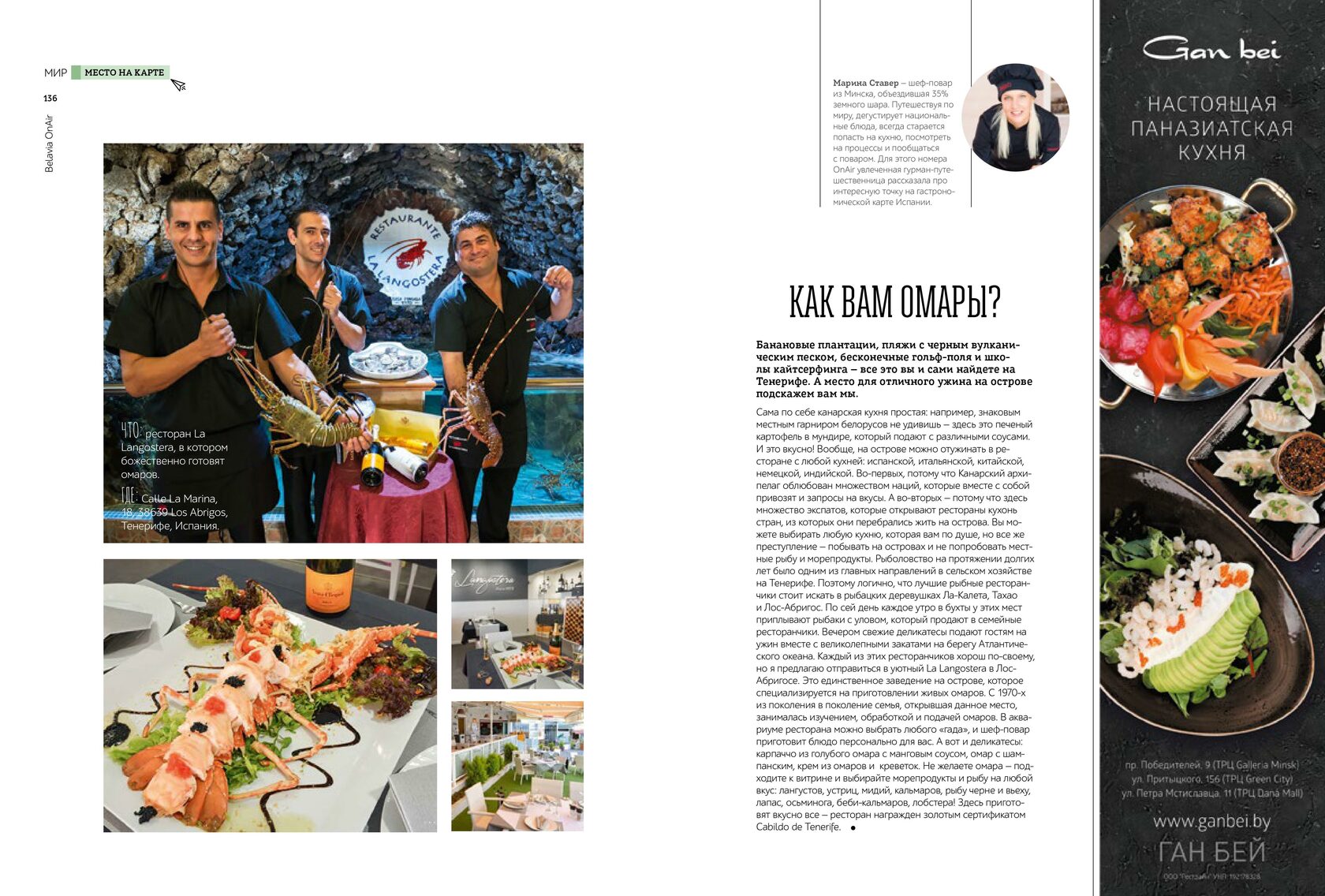
In Tenerife! Because I love fish and seafood very much. It was here that I tried parrotfish and moray eel for the first time! And the moray I cooked myself! The bite of this fish is most often fatal, but the meat can be eaten without any worry. While we were driving back from the fish market, I had already worked out how to marinate it in white wine, herbs and spices with garlic (this fish has a specific smell) and to fry it in flour (it is a very fatty fish with white meat). It turned out very tasty!
Many gourmets put the parrotfish vieja in first place for taste among all fish. And for the Canary Islands it is an absolutely obligatory product. Here they most often make soup out of it. And another goal of mine in Tenerife was to try the local "barakito" coffee. It is made in layers: condensed milk, lemon liqueur and strong coffee are poured into a glass cup, and milk foam goes on top. It is a very sweet, invigorating coffee with a beautiful presentation.
Your latest gastronomic discovery?
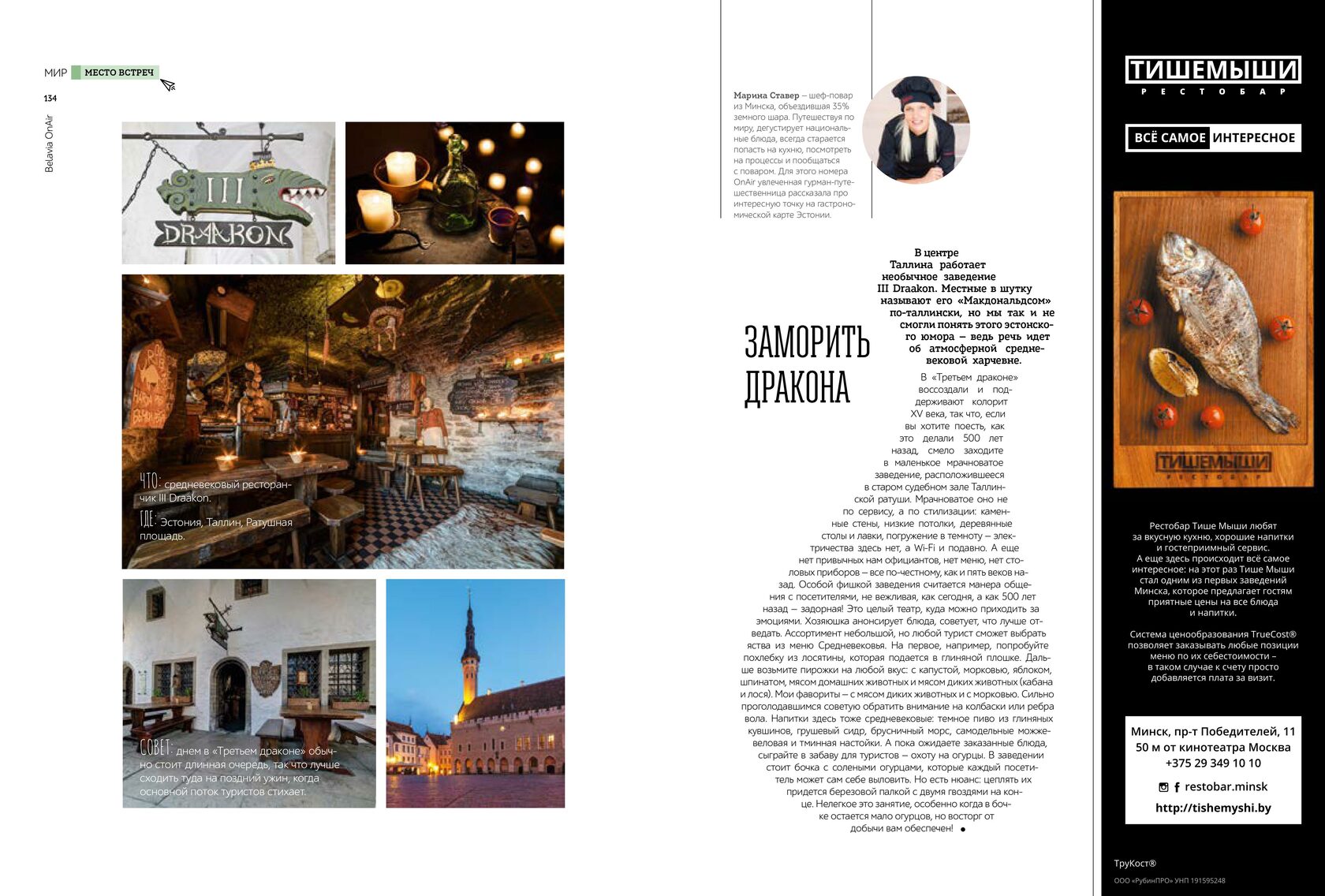
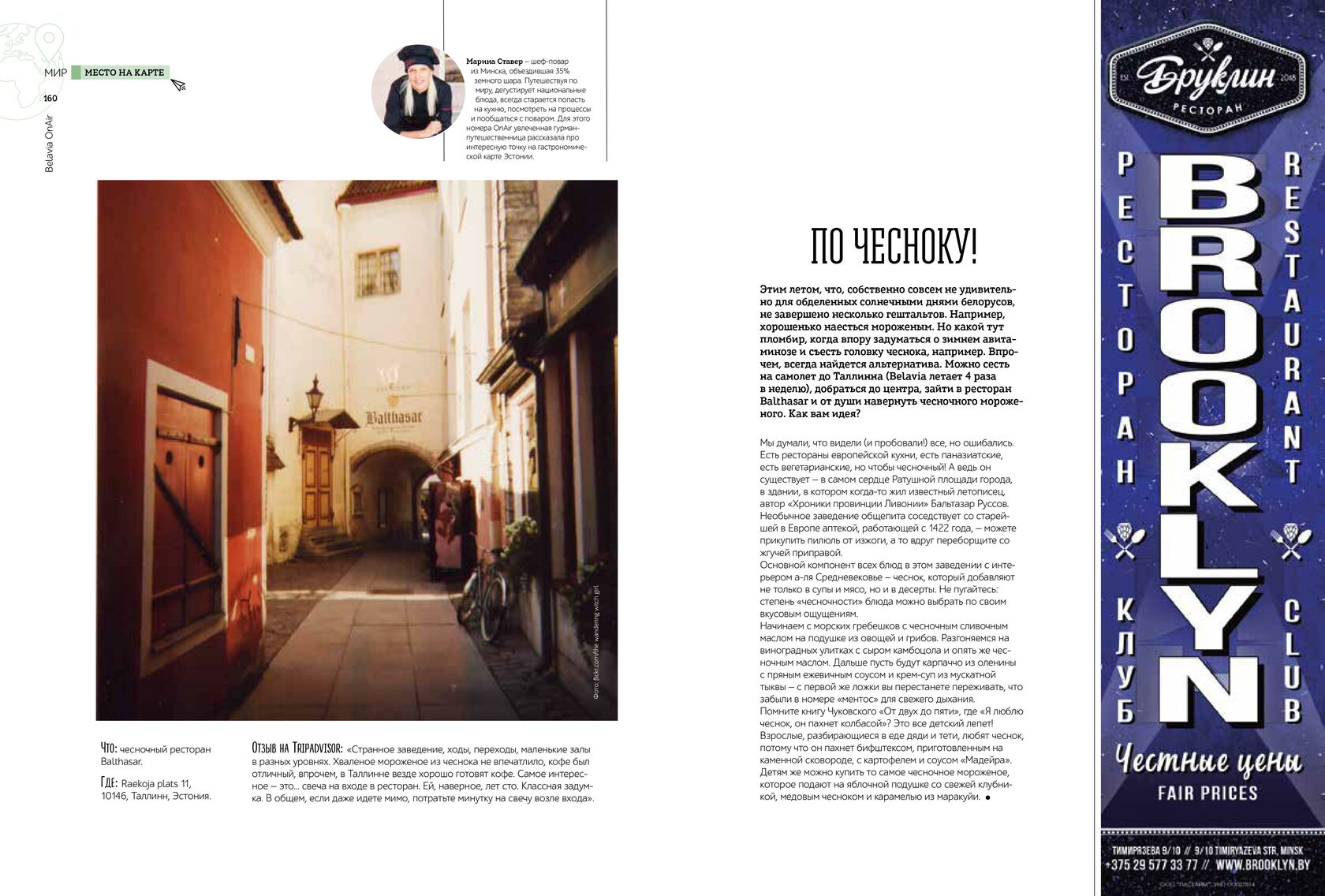
Tallinn. Setting off there, I immediately made the tasting of the local sprats my first item. The Estonian capital is fam— [the Russian column breaks off mid-word here; the sentence continues on a page that is not among the scans. The magazine printed its own English version of this same answer on the facing page, and it is reproduced below verbatim rather than reconstructed:] "Everyone brings from that city the liqueur 'Vana Tallinn', but the Estonians themselves will most likely present you with a tin of local sprat 'Tallinna Kilud'. I also recommend you to try the legendary sandwich with oil and sprat 'Kiluvõileib' in a Tallinn coffee house in Bulochnaya Street. There bread is spread with butter, grounded with egg, sprats are put on the top and all is sprinkled with green onions. This is a traditional Estonian tea snack, like our sandwich with cheese and butter. A visit to the restaurant-attraction of Medieval cuisine 'III Draakon' in Town Hall Square is also a must."
Photos provided by the organisers
Translated in full from the Russian original — Belavia OnAir · pp. 198–200 · Minsk, Belarus (interview; places covered — Lviv, Amsterdam, Andorra, Tenerife, Tallinn). Original title: “«В путешествиях я всегда стараюсь попасть на кухню»”.
Interview · pp. 198–200 · Belavia OnAir