

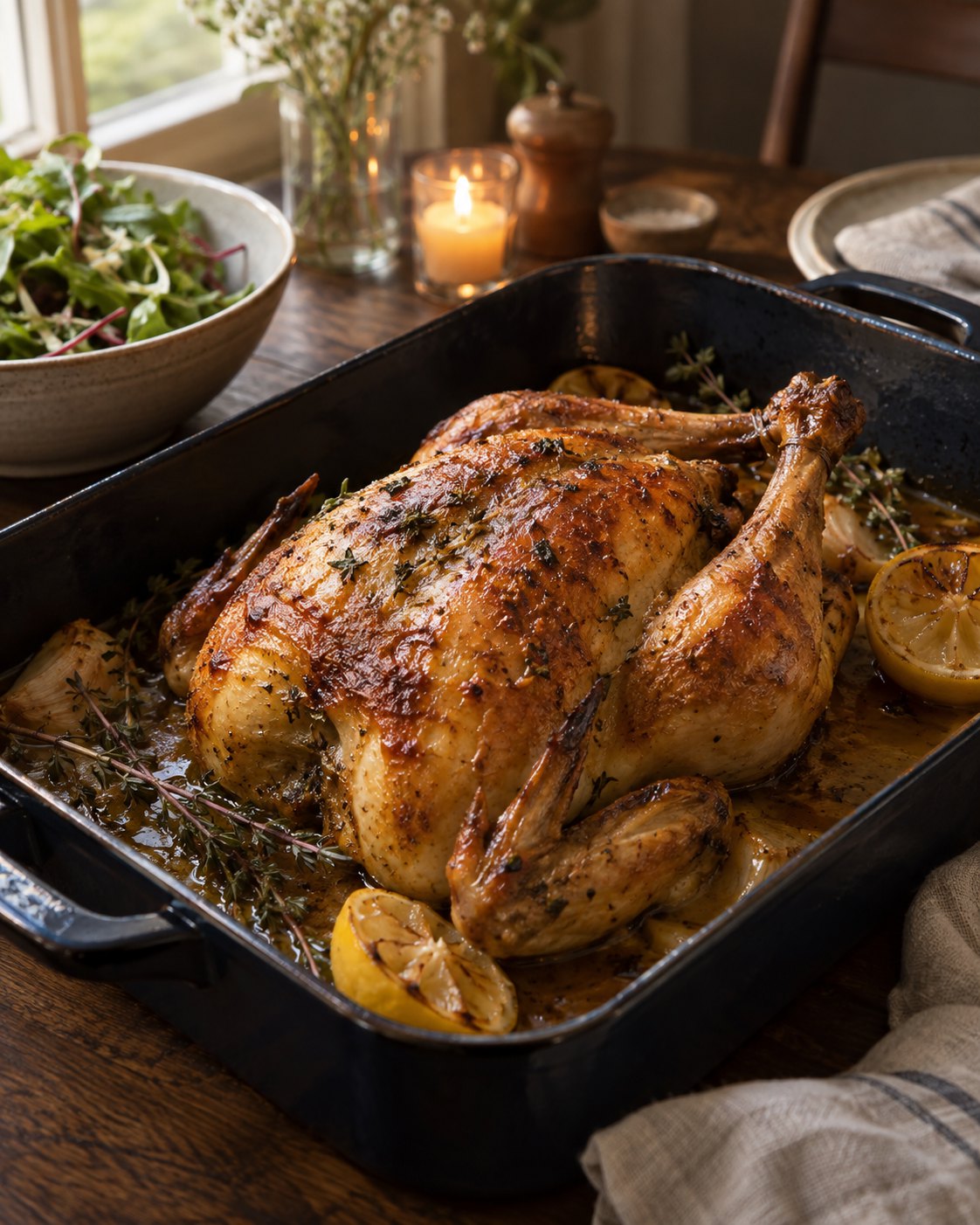
A whole chicken smeared with butter, roasted at 450 °F for 10 to 15 minutes, then at 375 °F for 30 to 45 minutes, basting as it cooks. Lemon, thyme and garlic go inside. A classic, the way I cook it. No gravy to make: butter, lemon and the chicken's juices make the sauce in the pan.
Ingredients:
Serves 4 to 6.
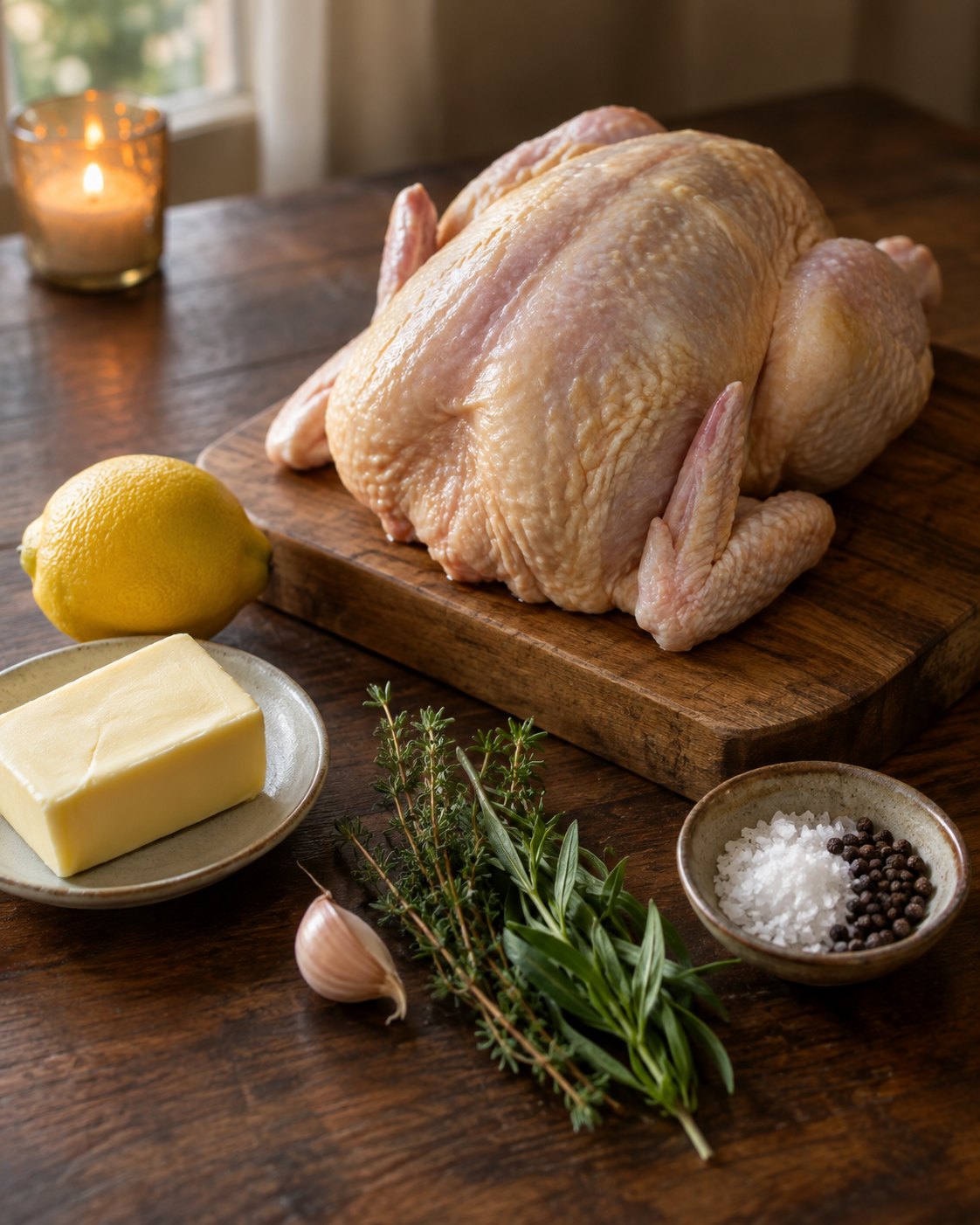
- 1 free-range chicken, about 4 lb
- 7 tablespoons (about 4 oz) good butter, at room temperature
- Salt and pepper
- 1 lemon
- Several sprigs of thyme or tarragon, or a mix of both
- 1 garlic clove, crushed
Instructions:
- Heat the oven to 450 °F.
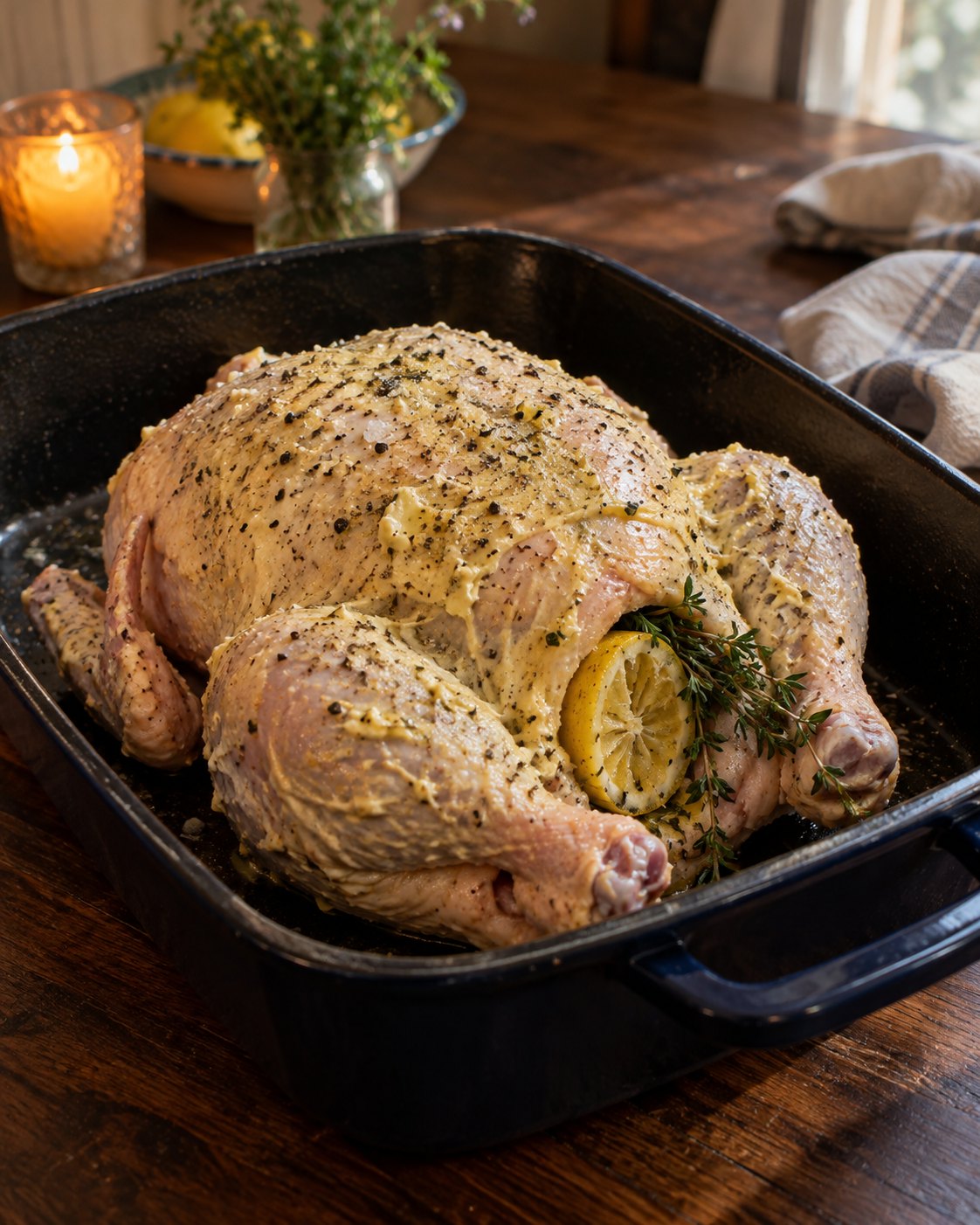
- Smear the butter all over the chicken with your hands. Set it in a roasting pan with room to spare.
- Season generously with salt and pepper and squeeze the lemon juice over the bird. Put the herbs, the garlic and the squeezed lemon halves inside the cavity.
- Roast 10 to 15 minutes. Baste, then turn the oven down to 375 °F.
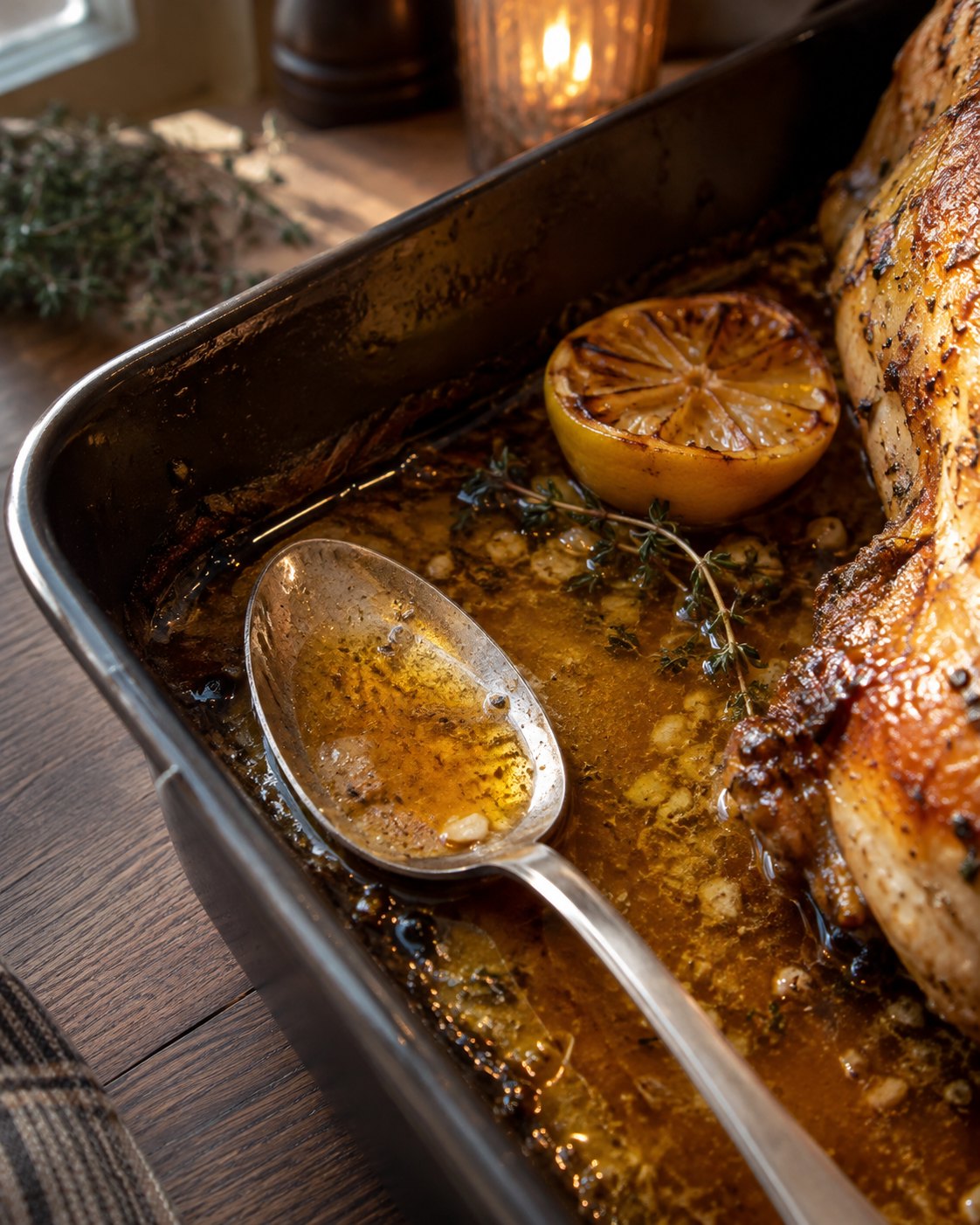
- Roast 30 to 45 minutes more, basting now and then. It is done when the skin is golden brown and crisp, the juices in the pan are nut-brown, and the juices run clear when you pierce the thigh. For certainty, the thickest part of the thigh reads 165 °F on a thermometer. If the bottom of the pan starts to darken, pour in about ½ cup water or stock.
- Turn off the oven, leave the door ajar, and let the chicken rest inside for at least 15 minutes.
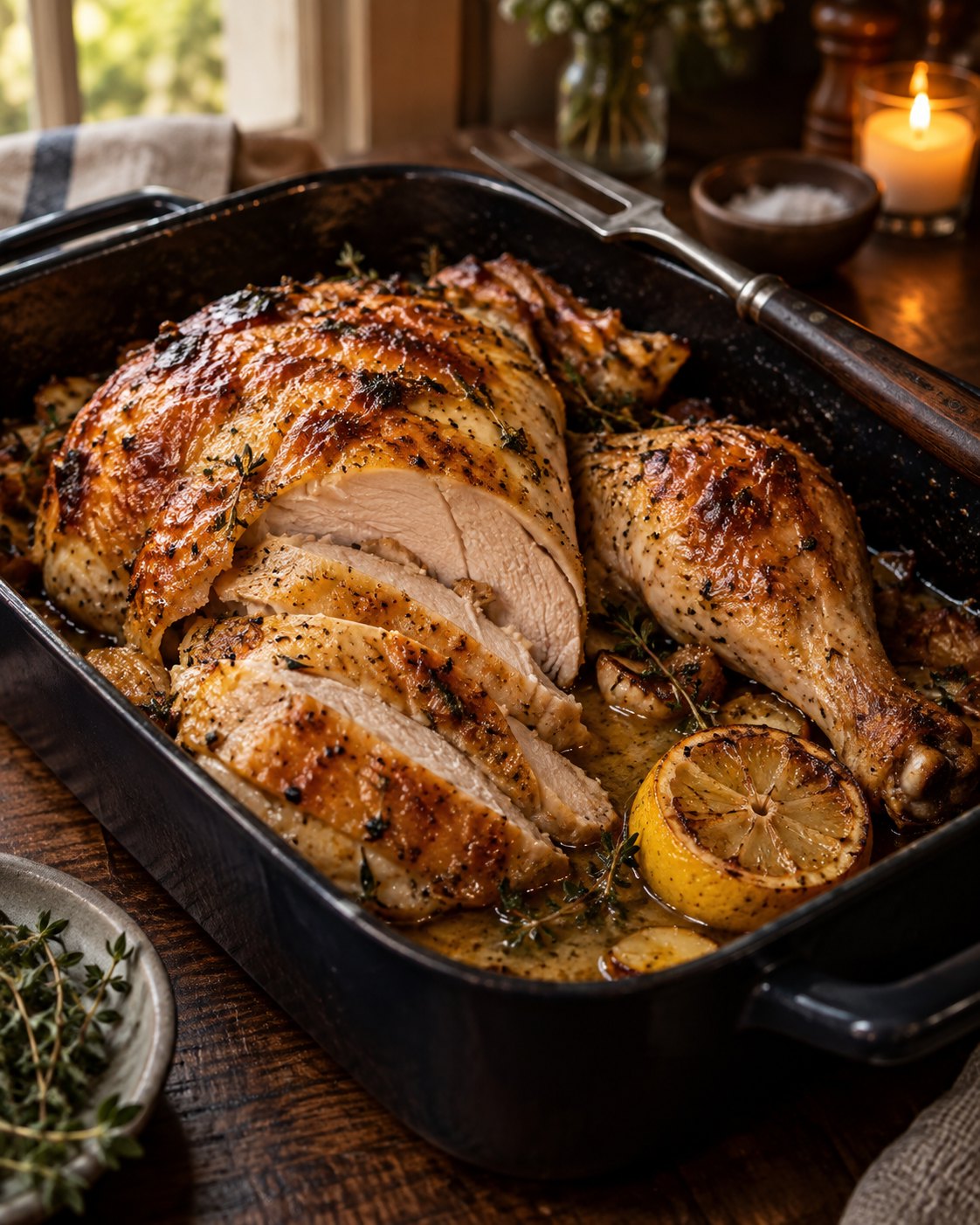
- Carve it right in the pan. Stir the butter, lemon juice and chicken juices lightly so they come together. For more sauce, add 1 to 2 tablespoons of water or a splash of wine. Serve with a green salad.
Why it tastes better than it sounds
The first 10 to 15 minutes at 450 °F start browning the buttered skin; at 375 °F the meat cooks through evenly. Each time you baste, the milk solids in the butter coat the skin and brown, so it turns golden, crisp and nutty. The lemon, thyme and garlic inside do not soak into the meat. They flavor the butter and juices that run into the pan. Resting with the door ajar lets the meat relax and hold its juices while the skin stays crisp. In the pan, the chicken juices bind the butter and lemon juice, and a light stir turns them into a smooth, glossy sauce with no flour.
Questions I get about this one
Do I need to make gravy?
No. The butter, lemon juice and chicken juices in the pan are the sauce; a light stir brings them together. For more, add 1 to 2 tablespoons of water or a splash of wine.
How do I know it is done?
The skin is golden brown and crisp, the pan juices are nut-brown, and the juices run clear when you pierce the thigh. For certainty, use a thermometer: 165 °F in the thickest part of the thigh, not touching the bone.
What if the pan starts to burn?
If the bottom of the pan starts to darken, pour in about ½ cup water or stock. The juices stay nut-brown instead of burning.
Why rest it in the oven with the door ajar?
It rests at least 15 minutes in the switched-off oven with the door ajar. It stays warm, the meat relaxes and keeps its juices, the skin stays crisp, and it carves easily.
Thyme or tarragon?
Either, or a mix of both. Thyme is earthy; tarragon tastes faintly of anise.
How long does it keep?
Refrigerate within 2 hours. It keeps 3 to 4 days in the fridge.
If you would rather I cooked
I am Marina Staver, a private chef in Miami and South Florida. I cook dinners in people's homes: birthdays, anniversaries, dinner parties, quiet evenings for two on a Wednesday. I plan the menu around what you actually like, shop for it, cook it in your kitchen and leave it clean.
From $200 per guest plus groceries, $2,000 event minimum. Your all-in quote comes within 24 hours. See what a private chef costs in Miami, or tell me about your date.
Sources: USDA Food Safety and Inspection Service, Safe Minimum Internal Temperature Chart: poultry, 165 °F; Leftovers and Food Safety: refrigerate within 2 hours and use within 3 to 4 days.
