

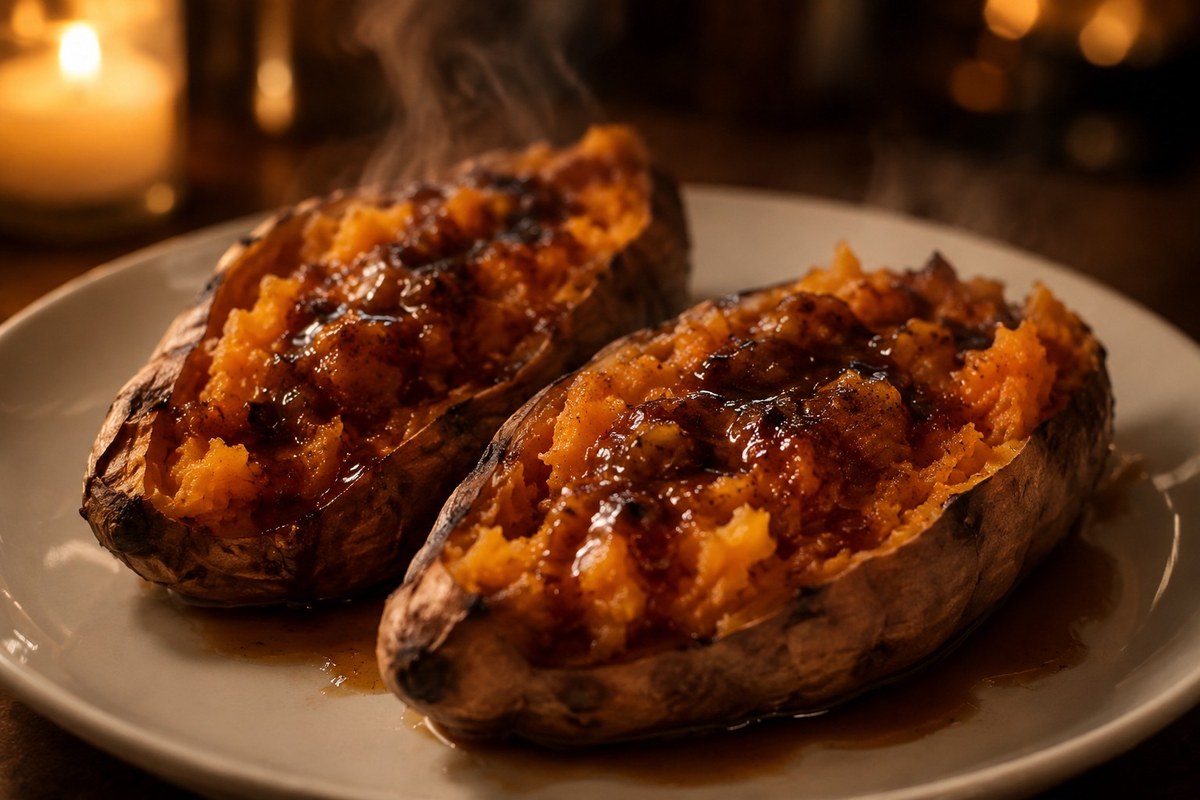
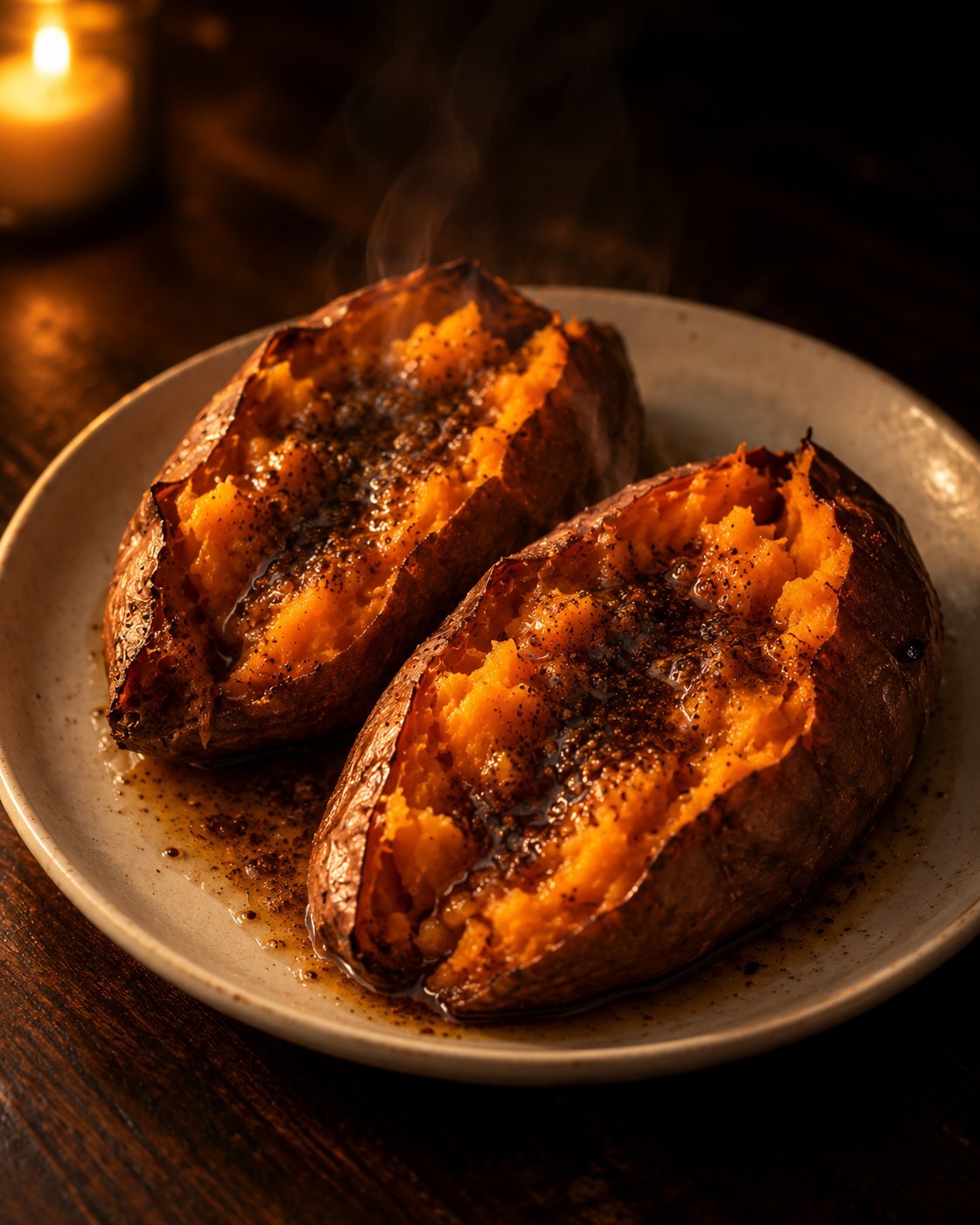
Soy-glazed sweet potatoes are whole sweet potatoes roasted slowly at 350°F for about an hour and a quarter, split open, and finished with a glaze of browned butter (beurre noisette) and soy sauce. Three ingredients, one technique, and it tastes meaty with no meat in it. This is the version I cook at private dinners in Miami.
I cook for people in their own kitchens, and the question I get most often is not about truffles or wagyu. It is this: what do you make on a Tuesday, for yourself?
This is one of those. Three ingredients, five minutes of shopping, one technique worth learning. I put it on plates at private dinners in Miami, next to things that cost twenty times as much, and it holds its own.
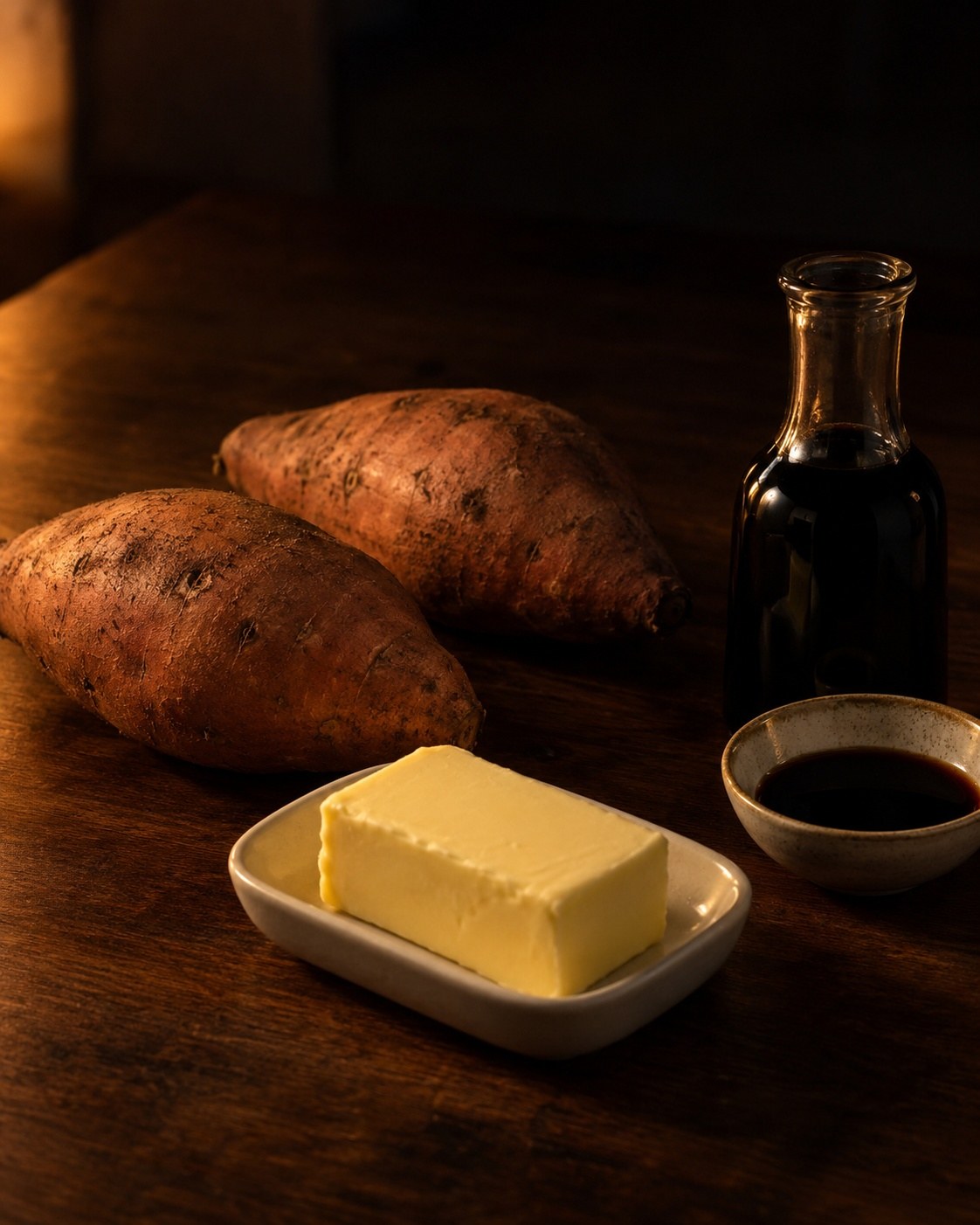
Ingredients
- 2 medium sweet potatoes
- 4 tablespoons unsalted butter
- 2 tablespoons soy sauce, dark if you have it
Serves two as a side. That is the whole list.
Method
- Heat the oven to 350°F. Scrub the sweet potatoes, prick each one a few times with a fork, and put them right onto a foil-lined tray, whole, skins on.
- Roast until a thin knife slides into the thickest part with no resistance at all. Start checking at an hour; an hour and a quarter is usual. Go by the knife, not by the clock — sweet potatoes vary more than recipes admit.
- Let them sit five minutes. Hold each one steady with a towel, split it lengthwise, and let the steam out away from your face before you fluff the flesh with a fork.
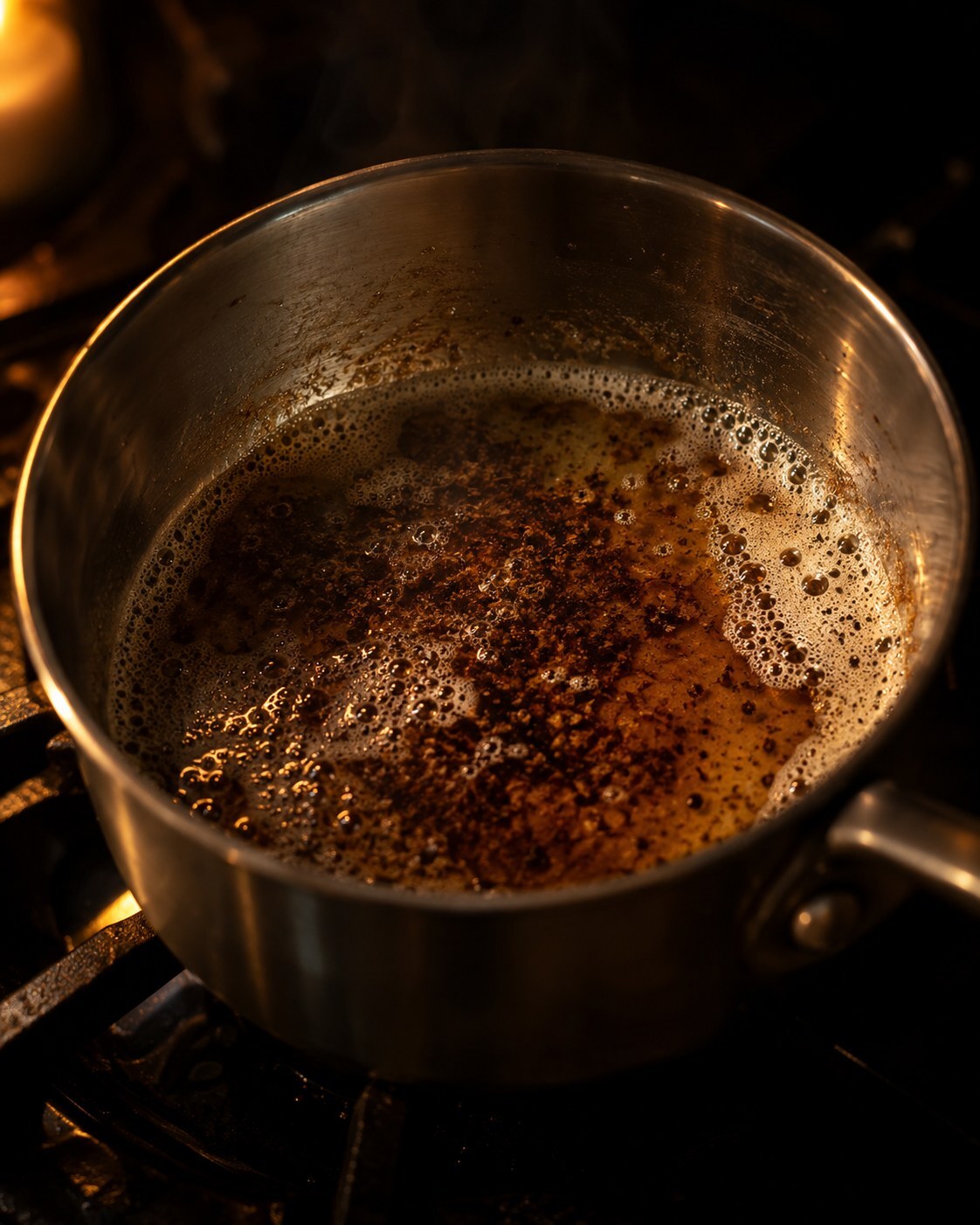
- Use a small saucepan with high sides, not a shallow pan — you will need the room when the soy sauce goes in. Melt the butter over medium heat and keep swirling. It will foam; tilt the pan and look under the foam at the milk solids on the bottom. The moment they turn the color of hazelnut and the kitchen smells toasted, take it off the heat. A few seconds too long on the burner and nutty turns to burnt.
- Give it twenty to forty seconds to cool. Then add the soy sauce a little at a time, standing back and stirring as you go — it will hiss and foam up to three times its volume for a second or two. Room temperature soy sauce is best, cold is fine in small amounts. Do not lean over the pan.
- Whisk the glaze hard with a fork right before you use it, scraping the browned specks up off the bottom — otherwise the fat and the salt separate and the best of it stays in the pan. Spoon it over the open potatoes and serve right away.
Why it tastes like more than three ingredients
Browning butter is a French technique called beurre noisette — hazelnut butter, named for the color and the smell. What is happening is that the water cooks off and the milk solids toast.
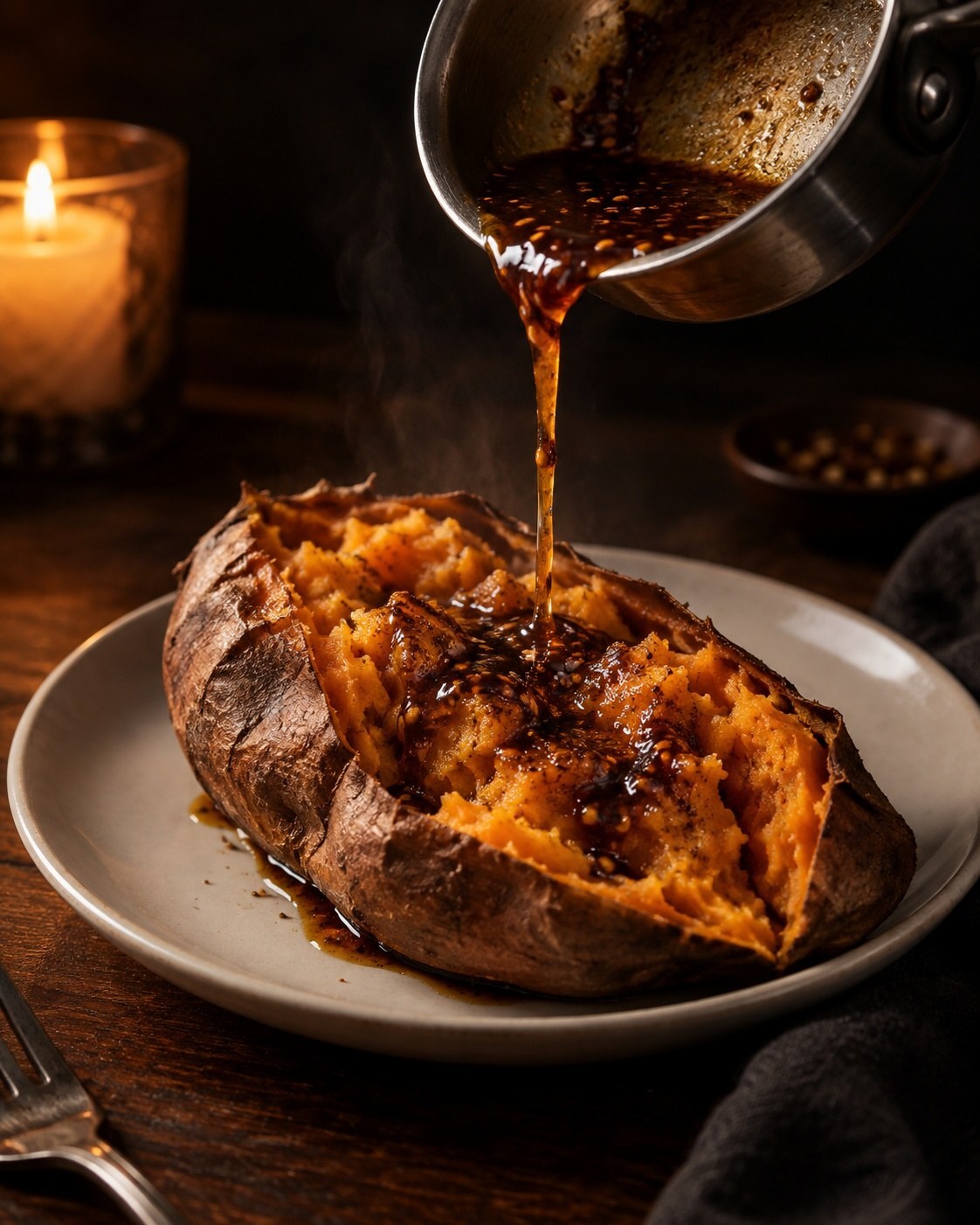
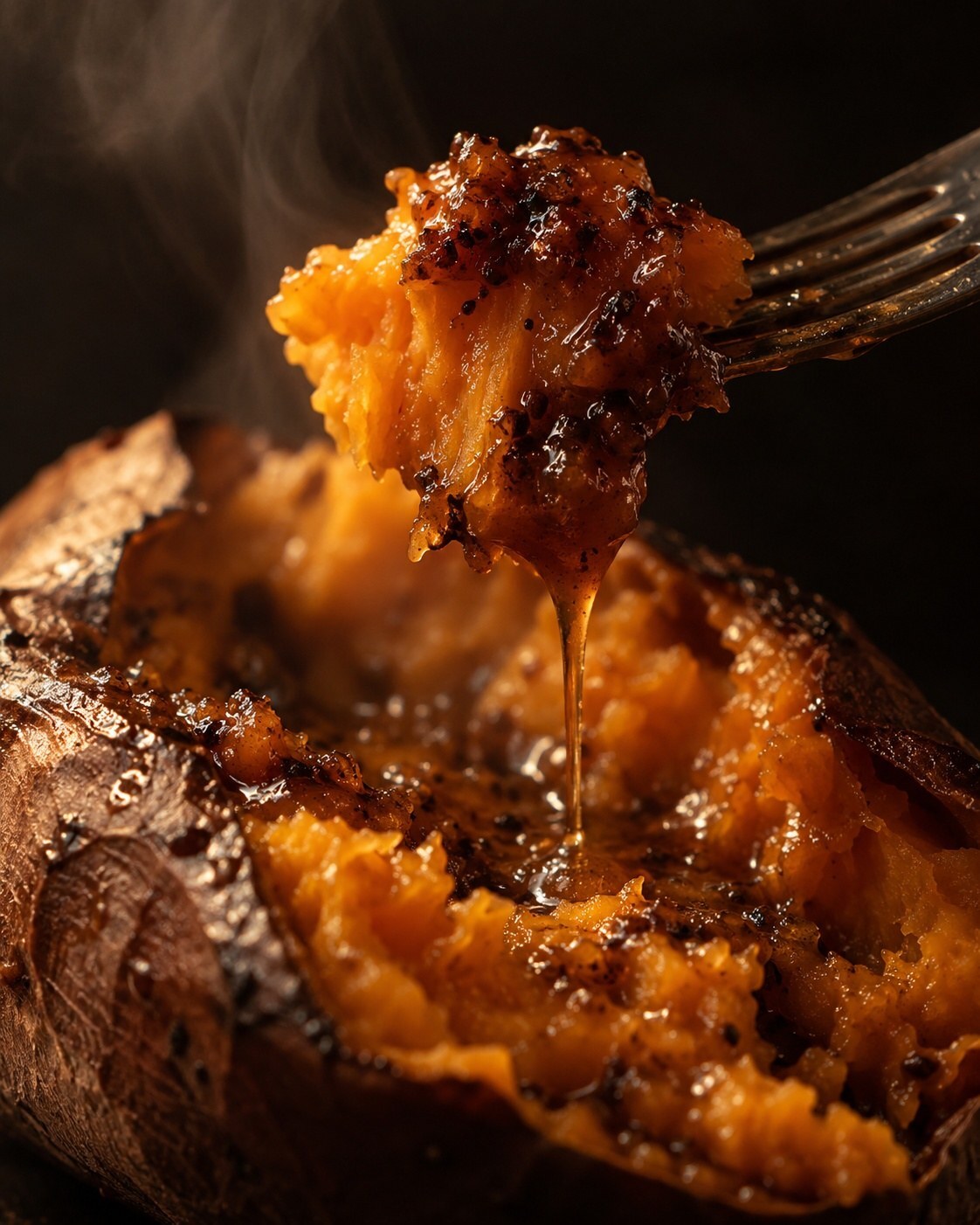
Then something worth knowing happens in you, not in the pan. Your tongue picks up the salt and the umami of the soy sauce. Your nose — from inside your mouth, through the back of your throat, which is where most of what you call taste actually comes from — picks up the toasted aromas the browned milk solids give off. Your brain adds those two separate signals into a single impression and reads it as meaty. There is no meat in the dish at all.
Meanwhile the long, slow roast has been doing its own work: an enzyme in sweet potato converts starch into maltose while the flesh sits in that gentle heat. Roast it faster and hotter and you get a sweet potato. Roast it slowly and you get candy with a skin on it. That is why the oven is at 350°F and not 425°F, and why the hour matters.
What to do with it
It goes under a piece of roasted fish, beside short ribs, or on its own with a green salad that has something sharp in it. The glaze keeps for a week in the fridge and comes back with thirty seconds of warmth — on carrots, on cauliflower, on rice, on a fried egg.
Questions I get about this recipe
Why does brown butter with soy sauce taste like meat?
Your tongue reads the salt and umami of the soy sauce. Your nose, through the back of your mouth, reads the toasted aromas of the browned milk solids. The brain combines those signals into one impression, and that combination reads as meaty even though there is no meat. The mechanism is called retronasal olfaction; see Shepherd, Nature 2006 (link below).
Why roast at 350°F and not hotter?
Sweet potato contains an enzyme, beta-amylase, that converts starch into maltose while the flesh is warm but not yet fully cooked. A slow roast keeps it in that window longer, so the potato ends up sweeter. A hot, fast roast shortens the window. Measured in Wei et al., PLoS One 2017 (link below).
Can I make the glaze ahead?
Yes. It keeps for a week in the fridge. Rewarm it gently for thirty seconds and whisk it hard before using, because the fat and the salt separate as it sits.
What if I only have light soy sauce?
Use it. Dark soy gives a deeper color and a little sweetness, but the recipe works with either. Add it a little at a time either way.
Can I do this with regular potatoes?
The glaze works on anything roasted: carrots, cauliflower, rice, a fried egg. Regular potatoes will not get the same sweetness, because they lack the enzyme that turns starch into maltose during a slow roast.
If you would rather I cooked
I am Marina Staver, a private chef in Miami and South Florida. I cook dinners in people's homes: birthdays, anniversaries, dinner parties, quiet evenings for two on a Wednesday. I plan the menu around what you actually like, shop for it, cook it in your kitchen and leave it clean.
From $200 per guest plus groceries, $2,000 event minimum. Your all-in quote comes within 24 hours. Tell me about your date.
More: what a private chef costs in Miami · private chef services in Miami · a chef for your dinner party · more recipes from my kitchen · get the next recipe by email
Sources: Shepherd, G. M. (2006), Nature 444, doi:10.1038/nature05405 · Wei, S., Lu, G., & Cao, H. (2017), PLoS One 12(8), doi:10.1371/journal.pone.0182604
